


.jpg&description=Understand the divorce procedure in India, including mutual consent, contested divorce, required documents, court hearings, legal rights, maintenance and settlement options.)
Marriage is an important personal and legal relationship, but sometimes differences between partners become difficult to resolve. Issues such as ongoing disagreements, financial disputes, lack of compatibility, domestic problems, and changing personal circumstances can make it challenging for couples to continue their married life. When reconciliation is no longer possible, divorce may become a practical legal option. Understanding the legal requirements and available choices can help individuals make informed decisions during this difficult period.
The divorce procedure in India involves several legal steps, beginning with understanding the applicable marriage law and deciding whether both spouses agree to separate. Depending on the circumstances, couples may choose mutual consent divorce or pursue a contested divorce through the family court. Each route has different requirements, documentation, hearings, and timelines. Knowing what to expect can reduce confusion and help both parties prepare properly.
Divorce is not simply about ending a marriage. It can also involve decisions about financial support, property, child custody, education expenses, and other responsibilities. These matters deserve careful attention because court decisions and settlement agreements can affect both spouses and their children for years. A clear understanding of the legal process makes it easier to protect individual rights while approaching the situation responsibly.
Understanding the Legal Framework for Divorce in India
India does not follow one universal divorce law for every marriage. The applicable legislation generally depends on the religion or legal framework under which the marriage was solemnised. For example, Hindu marriages are commonly governed by the Hindu Marriage Act, 1955, while civil marriages registered under the Special Marriage Act, 1954, follow that legislation. Other communities may have different personal laws governing divorce.
Under the Hindu Marriage Act, eligible spouses can seek divorce through mutual consent or on legally recognised grounds. These grounds may include cruelty, desertion, adultery, conversion, certain mental health circumstances as defined by law, and other statutory conditions. The exact requirements depend on the facts of the case and the applicable provision. A person should not assume that every marital disagreement automatically qualifies as a legal ground for divorce.
The Special Marriage Act provides a separate legal framework for marriages solemnised under its provisions. Although some principles are similar, the eligibility conditions, statutory requirements, and procedural details may differ. Therefore, identifying the correct legislation is an important first step before filing a petition. Consulting a family-law professional can help determine which provisions apply and whether the available evidence supports the proposed legal action.
Types of Divorce Available in India
Mutual Consent Divorce
Mutual consent divorce is generally considered a more straightforward option when both spouses agree that their marriage should legally end. Instead of asking the court to decide which partner is responsible for the breakdown of the relationship, both parties jointly approach the court and request dissolution of the marriage. Under Section 13B of the Hindu Marriage Act, spouses must satisfy statutory conditions, including living separately for at least one year and being unable to live together. They must also mutually agree that the marriage should be dissolved.
The spouses usually discuss important matters before filing the petition. These may include maintenance, permanent alimony, child custody, visitation rights, property-related arrangements, and pending disputes. Reaching a clear settlement can reduce disagreements during the court proceedings. However, mutual consent must remain voluntary. Neither spouse should be pressured into signing documents or accepting financial arrangements simply to complete the process quickly.
Contested Divorce
A contested divorce takes place when one spouse wants to end the marriage but the other does not agree, or when the parties disagree about the legal grounds or related issues. In this situation, the person seeking divorce must establish a legally recognised ground under the applicable law. The court considers the petition, the response filed by the other spouse, supporting documents, witness statements, and other relevant evidence.
Contested proceedings can become complicated because both parties may present different versions of the same events. For example, one spouse may claim cruelty based on repeated harassment, while the other may deny the allegations. The court examines the available evidence before reaching a decision. Since these cases may involve several hearings and detailed legal arguments, professional representation and organised documentation can be particularly valuable.
Step-by-Step Divorce Procedure in India
The divorce procedure generally begins with legal preparation and continues through filing, court examination, settlement discussions, and the final order. The exact sequence depends on whether the matter involves mutual consent or a contested petition.
1. Understanding Eligibility and Legal Grounds
Before approaching a court, the concerned spouse should understand the legal conditions applicable to the marriage. This includes checking the marriage certificate or other proof of marriage, the date of marriage, the period of separation, and the circumstances that may support a divorce petition. For mutual consent cases, both spouses must satisfy the relevant statutory conditions. For contested cases, the petitioner needs to identify an appropriate legal ground.
It is also important to consider jurisdiction. A divorce petition is generally filed before the appropriate district or family court based on the residence of the parties and other jurisdictional rules under the relevant legislation. Filing in an incorrect court can create unnecessary procedural difficulties. A lawyer can help identify the proper court and review the facts before preparing the petition.
2. Collecting the Required Documents
Documentation plays an important role because the court needs reliable information about the marriage and the circumstances of the dispute. Both spouses should organise relevant records before filing the case. The documents required may vary depending on the type of divorce and the specific facts.
Commonly required documents include:
-
Marriage certificate or other accepted proof of marriage.
-
Identity and residential address documents.
-
Recent photographs and relevant marriage records.
-
Details of children, if applicable.
-
Financial records and evidence supporting relevant claims.
In contested matters, additional material may be necessary. This could include communication records, medical documents, financial statements, police complaints, or other evidence connected with the allegations. Documents should be genuine and relevant. Altering records, hiding important information, or presenting misleading evidence can seriously damage a person’s legal position.
3. Preparing and Filing the Divorce Petition
After reviewing eligibility and collecting the necessary information, the petition is prepared according to the applicable law. In a mutual consent case, both spouses ordinarily file a joint petition explaining their decision to separate and confirming that the statutory conditions have been satisfied. They may also submit details of their settlement regarding maintenance, children, and other financial responsibilities.
In a contested case, the petitioner files an individual petition explaining the legal grounds and supporting facts. The petition should present events clearly, avoid unnecessary personal allegations, and include relevant supporting information. Once the documents are completed, the petition is submitted to the appropriate court. The court registry checks the filing for procedural requirements, and any identified defects may need to be corrected before the matter proceeds.
4. Court Notice and Response
In contested proceedings, the court generally issues notice to the other spouse after the petition is accepted for processing. The respondent receives an opportunity to appear and submit a reply. The response may admit, deny, or explain the allegations made in the petition. Both parties can present their legal positions through their advocates.
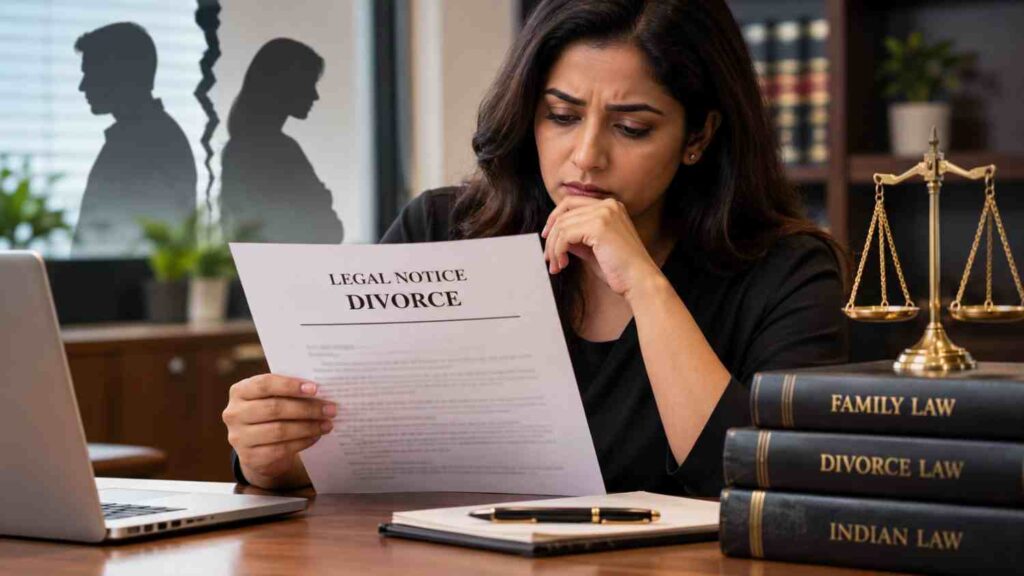
The court may also encourage settlement or reconciliation where appropriate. Such efforts are intended to determine whether the marriage can be preserved or whether the dispute can be resolved without a lengthy trial. However, reconciliation should not be forced, particularly where there are concerns about safety, violence, or coercion. The legal process must respect the rights and circumstances of both individuals.
5. Mediation and Settlement Discussions
Family courts may refer suitable disputes to mediation to help spouses explore an agreement. Mediation provides an opportunity to discuss practical matters in a structured environment with the assistance of a neutral mediator. The discussion may cover financial support, child custody, visitation arrangements, division of responsibilities, and other unresolved issues.
A successful settlement can save time, reduce litigation expenses, and limit emotional stress. However, any agreement should be reviewed carefully before it is accepted. Both parties should understand their obligations and ensure that the terms are realistic and legally appropriate. If mediation does not produce an agreement, the case may continue through the regular court process.
6. First Motion and Second Motion in Mutual Consent Divorce
In a mutual consent case under the Hindu Marriage Act, the court generally records the statements of both spouses during the first motion. The judge checks whether the marriage was legally solemnised, whether the parties satisfy the statutory separation requirement, and whether their decision is voluntary. The court may examine the settlement terms and ask questions to ensure that both individuals understand the consequences of their decision.
The second motion is ordinarily made after the statutory waiting period of six months and within eighteen months from the presentation of the first petition. However, the six-month waiting period is not absolute. In Amardeep Singh v. Harveen Kaur (2017), the Supreme Court clarified that courts may waive this period in appropriate cases after considering factors such as the absence of any possibility of reconciliation and a genuine settlement of outstanding issues. Waiver is discretionary, not automatic.
7. Evidence, Hearings and Final Arguments
In contested divorce cases, the court may frame issues based on the allegations and responses submitted by both parties. Each spouse receives an opportunity to present relevant evidence, produce witnesses, and challenge the other party’s claims. For example, if a spouse alleges financial harassment or cruelty, relevant records and credible witness testimony may help the court understand the circumstances.
After examining the evidence, the court hears the final arguments presented by the lawyers. Both sides explain how the facts and applicable legal provisions support their respective positions. The judge then evaluates the material available and determines whether the petitioner has established sufficient legal grounds for divorce. Depending on the complexity of the dispute, this stage may involve several hearings.
8. Final Divorce Decree
The final stage is the court’s decision. If the court is satisfied that the legal requirements have been fulfilled, it passes a divorce decree formally dissolving the marriage. In mutual consent matters, the decree is generally granted after the court verifies the parties’ continued consent and settlement arrangements. In contested matters, the decision depends on the evidence and legal grounds established during the proceedings.
A divorce decree is an important legal document and should be preserved carefully. It may be required when updating official records, resolving financial matters, entering a new marriage where legally permitted, or dealing with other administrative requirements. If either party believes the decision contains a legal error, the possibility of an appeal should be discussed with a qualified lawyer within the applicable limitation period.
Documents Required for Divorce in India
The documents needed depend on the applicable personal law, the type of divorce, and the circumstances of the marriage. Providing complete and accurate information helps the court process the petition without avoidable delays. Both parties should keep original documents safely and arrange copies for filing and legal reference.
| Document | Why it may be required |
|---|---|
| Marriage certificate | Establishes details of the marriage |
| Identity proof | Confirms the identity of the parties |
| Address proof | Helps establish residence and jurisdiction |
| Marriage photographs | May support proof of marriage |
| Children’s birth certificates | Establishes children’s details |
| Income documents | Helps assess maintenance claims |
| Settlement agreement | Records mutually agreed conditions |
| Supporting evidence | Helps establish grounds in contested cases |
Not every case requires every document listed above. For example, a contested divorce involving allegations of cruelty may require supporting communication records or medical documents, whereas a straightforward mutual consent matter may primarily involve marriage records, identity documents, financial information, and a written settlement. The lawyer should prepare a case-specific document checklist before filing.
Maintenance, Alimony and Financial Rights
Financial arrangements are an important part of divorce proceedings. One spouse may seek maintenance or financial support depending on their income, financial needs, responsibilities, and the applicable legal provisions. The court may consider factors such as the earning capacity of both parties, existing financial obligations, standard of living during marriage, and other relevant circumstances before deciding an appropriate amount.
Permanent alimony and interim maintenance are not necessarily the same. Interim maintenance may provide financial assistance while the case is pending, whereas permanent alimony concerns support after the matrimonial proceedings. Depending on the applicable law and circumstances, maintenance-related applications may be available under different statutory provisions. Financial arrangements should be documented clearly to avoid future disagreements regarding payment amounts, dates, and responsibilities.
Property ownership also needs careful consideration. Divorce does not automatically mean that every asset must be divided equally between spouses. Ownership documents, the source of funds, applicable personal laws, and the nature of the property may influence the legal position. Both parties should disclose relevant financial information and obtain legal advice before signing any property settlement.
Child Custody and Parental Responsibilities
When a married couple has children, custody arrangements become one of the most important considerations during separation. Courts generally prioritise the welfare and best interests of the child rather than treating custody as a reward for either parent. The child’s age, educational needs, emotional well-being, safety, existing relationship with each parent, and living arrangements may all be relevant.
Custody can take different forms depending on the circumstances. One parent may receive physical custody while the other receives visitation rights. In some situations, parents may agree on shared parenting arrangements that allow both to remain actively involved in the child’s upbringing. Decisions about school expenses, healthcare, holidays, and communication should also be addressed wherever possible.
Parents should avoid using children as a means of pressuring each other during divorce proceedings. A practical parenting arrangement can reduce uncertainty and provide stability during a major family transition. Even after divorce, both parents may continue to have legal and financial responsibilities toward their children.
Difference Between Mutual Consent and Contested Divorce
Understanding the differences between the two main options can help couples decide which legal route is appropriate.
| Comparison | Mutual Consent Divorce | Contested Divorce |
|---|---|---|
| Agreement | Both spouses agree | Disagreement may exist |
| Filing | Joint petition | Usually filed by one spouse |
| Legal grounds | Statutory mutual consent conditions | Legally recognised grounds |
| Proceedings | Generally simpler | Usually more detailed |
| Evidence | Mainly documents and settlement details | Evidence and witness examination |
| Duration | Often comparatively shorter | May take considerably longer |
The appropriate option depends on the circumstances rather than simply the desire to finish the case quickly. Mutual consent may be more practical when both spouses can negotiate fairly, while contested proceedings may be necessary when one party refuses to cooperate or when serious disputes remain unresolved.
How Long Does the Divorce Procedure Take in India?
The time required to complete a divorce depends on the type of petition, the court’s workload, the cooperation of both spouses, and the complexity of related disputes. Mutual consent cases are generally completed more quickly because both parties agree on ending the marriage and may settle financial and custody matters beforehand. However, statutory requirements and court schedules still influence the final timeline.
Contested cases may take considerably longer because they involve written responses, evidence collection, witness examination, mediation attempts, and legal arguments. Delays can also occur when one party does not appear, documents are incomplete, or several financial and custody issues remain unresolved. Therefore, there is no single timeline that applies to every divorce case.
The following table provides a general understanding of the process:
| Stage | General time consideration |
|---|---|
| Document preparation | Depends on readiness |
| Filing and scrutiny | Depends on court processing |
| Mutual consent divorce | Usually several months |
| Contested divorce | May take several years |
| Appeals | Depends on the case and court |
These are general estimates rather than guaranteed deadlines. The actual duration can differ significantly depending on the applicable legislation and individual circumstances.
Common Mistakes to Avoid During Divorce Proceedings
Although the legal process may appear straightforward, certain mistakes can create unnecessary complications. People sometimes sign settlement agreements without understanding their long-term financial consequences or submit incomplete documents that require repeated corrections. Others make emotional decisions during arguments, which can negatively affect negotiations and communication.
A more careful approach can help avoid common difficulties:
-
Do not sign legal agreements without understanding every condition.
-
Keep copies of important financial and marriage-related documents.
-
Avoid hiding income, property, or other relevant financial information.
-
Follow court instructions and attend scheduled hearings.
-
Seek professional advice before accepting a final settlement.
Another important mistake is assuming that an informal separation automatically ends a marriage. Living separately does not, by itself, legally dissolve the marital relationship. A valid divorce decree from the competent court is generally required. Understanding this distinction is essential when considering remarriage, official documentation, and future legal responsibilities.
Why Legal Assistance Is Important
Family law involves specific statutory requirements, procedural rules, and legal rights that can be difficult to understand without professional guidance. An experienced family lawyer can assess the circumstances, identify the applicable legislation, prepare the petition, organise supporting evidence, and represent the client during court proceedings. Legal assistance can also help individuals understand whether mediation, mutual consent, or contested litigation is appropriate.
A lawyer can be particularly helpful when the matter involves complicated property ownership, significant financial differences, domestic violence allegations, child custody disputes, or disagreements about maintenance. However, hiring a lawyer does not mean that every dispute must become a lengthy court battle. In suitable situations, legal professionals can help both parties negotiate reasonable settlements and reduce unnecessary conflict.
Individuals who cannot afford private legal representation may also explore eligibility for free legal services through the Legal Services Authorities framework in India. Access to appropriate legal assistance can make it easier to understand available remedies and participate effectively in the proceedings.
Conclusion
Divorce is a significant personal and legal decision that requires careful consideration of individual circumstances, family responsibilities, and future financial security. Understanding the available legal options, collecting the necessary documents, and knowing what happens during court proceedings can make the experience more manageable. Whether both spouses agree to separate or one party needs to approach the court independently, following the correct legal process is essential.
The divorce procedure in India involves different stages, including determining legal eligibility, preparing documents, filing a petition, attending hearings, considering settlement opportunities, and obtaining the final divorce decree. Mutual consent cases can offer a comparatively simpler route, while contested matters require a more detailed examination of legal grounds and supporting evidence. Maintenance, property arrangements, and children’s welfare should also receive appropriate attention throughout the process.