

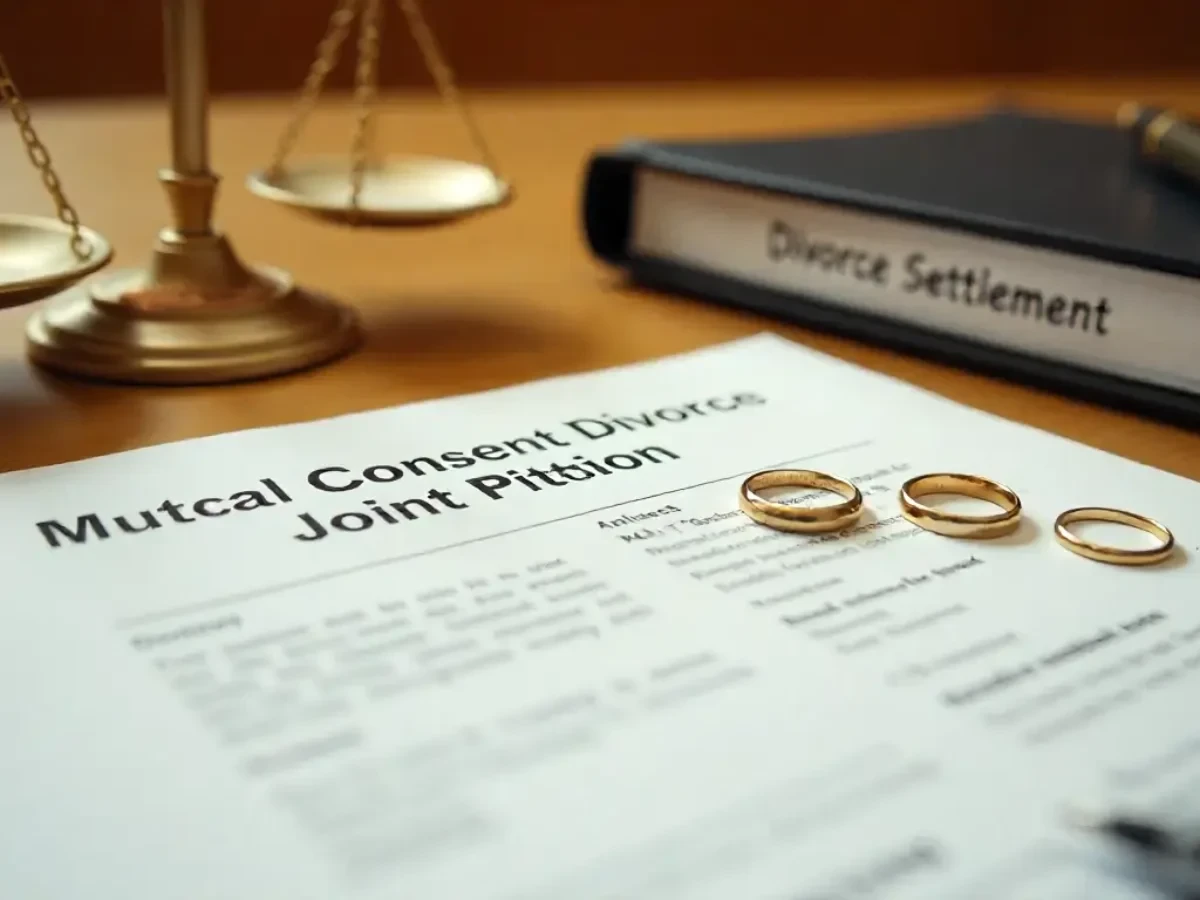

Ending a marriage is a significant personal decision that often involves emotional, financial, and legal challenges. Alongside deciding how to move forward, individuals must understand the documentation required to begin and complete the divorce process. Proper paperwork helps establish the identity of both spouses, confirm the marriage details, explain the grounds for separation where applicable, and record agreements concerning children, financial support, and property. Knowing what to prepare in advance can reduce unnecessary delays and make communication with a lawyer or court more productive.
In India, divorce procedures depend on the applicable personal law, the circumstances of the marriage, and whether both spouses agree to separate. For example, a couple seeking a mutual consent divorce generally follows a different process from someone filing a contested divorce. The documents required can also vary according to the court, the nature of the dispute, and the relief being requested. Understanding the purpose of each document is therefore more useful than relying on a single checklist that may not suit every situation.
This guide explains the common paperwork involved, how to organize it, what happens after filing, and which issues deserve particular attention. Although preparing documents is an important first step, it is equally important to understand that completing forms alone does not legally dissolve a marriage. The applicable law and the court’s final orders determine the legal outcome.
Understanding Divorce Papers and Their Purpose
Divorce papers are the legal documents used to request, support, process, and finalize the dissolution of a marriage. Depending on the case, this paperwork may include a divorce petition, marriage certificate or other evidence of marriage, identity documents, address proof, financial statements, affidavits, and supporting records. Some documents establish basic facts, while others explain the reasons for seeking divorce or record arrangements that the spouses have agreed upon.
For instance, a couple that agrees to separate may need to submit a joint petition and documents explaining their settlement. If one spouse contests the divorce, the petitioner may also need evidence relevant to the legal grounds being claimed. A dispute involving child custody, maintenance, domestic violence, or property may require additional records. The exact requirements should be confirmed with the appropriate family court or a qualified lawyer because documentation accepted in one case may not be sufficient in another.
Types of Divorce and How Documentation Differs
The first step is to identify which legal route applies to the marriage. In India, the process can depend on the religion or personal law governing the marriage, whether the marriage was registered under a particular statute, and whether both parties consent to the divorce. Couples married under the Special Marriage Act, 1954, for example, may follow a different statutory framework from couples whose marriages are governed by the Hindu Marriage Act, 1955. Other personal laws may have their own procedures and requirements.
The distinction matters because a document checklist cannot replace the correct legal procedure. Even when spouses agree on the terms of separation, they should confirm that their proposed process is legally available and that the petition contains the information required by the relevant law. Where there is disagreement about the separation, maintenance, custody, or other issues, legal advice can help determine what evidence should be collected and how it should be presented.
Mutual Consent Divorce
A mutual consent divorce generally involves both spouses agreeing to seek dissolution of the marriage and addressing the terms of their separation. Depending on the applicable law, the petition may describe the marriage, the period of separation where relevant, the parties’ decision to end the marriage, and their arrangements concerning maintenance, property, and children. Supporting documents establish identity, residence, and the marriage details, while a written settlement may clarify the terms agreed upon.
Under some applicable procedures, a statutory waiting period or second motion may be relevant. However, the exact requirements and whether any waiting period can be waived depend on the governing law and judicial decisions. Agreement between the spouses does not automatically mean that a divorce is final as soon as the petition is submitted. The court must complete the required process and issue the appropriate decree.
Contested Divorce
A contested divorce arises when one spouse seeks divorce and the other disputes the request, the grounds, or particular aspects of the case. The petition must set out the legally relevant facts and the grounds relied upon. Evidence may be required to support those claims, and the responding spouse may submit an answer or other permitted pleadings. Depending on the circumstances, records may include communications, financial information, medical documents, witness evidence, or other material relevant to the issues before the court.
The importance of evidence depends on the specific legal claim. Not every personal message or private record is automatically admissible or appropriate to submit. Documents should be collected lawfully, preserved in their original form where possible, and discussed with a lawyer before being used in court. A contested case may involve several hearings and additional procedural steps, so keeping records organized from the beginning can make the process easier to manage.
Essential Documents Commonly Required for Divorce
The documents needed will depend on the applicable law and the facts of the case. Nevertheless, several categories of paperwork are commonly relevant when preparing a divorce petition. Applicants should check the local family court’s filing requirements rather than assume every item is mandatory in every matter.
Identity and Address Proof
Both spouses may need documents that establish their identities and current or relevant addresses. Depending on the court’s requirements, these could include government-issued identity documents, address proof, or other accepted records. The petition may also require details about the parties’ residences and information relevant to the court’s jurisdiction. If either spouse has moved since the marriage or is living in another city, accurate address information becomes particularly important.
Names, dates, and addresses should be checked carefully for consistency. If a name differs between the marriage certificate and identity documents, supporting records explaining the difference may be useful. Applicants should ask the lawyer or court registry which documents and copies are acceptable and whether originals must be produced for verification.
Marriage Certificate and Related Records
A marriage certificate is useful evidence of the marriage and is commonly requested where the marriage has been registered. Other evidence of the marriage may be relevant when a certificate is unavailable or the circumstances require it. The documents accepted depend on the applicable law and the court’s directions. Applicants should not assume that the absence of a certificate automatically prevents a divorce case from being filed.
Other records may include wedding photographs, invitations, registration details, or documents showing the date and place of marriage. These should be prepared only as appropriate to the case. If records are missing, damaged, or contain errors, legal advice can help identify suitable alternatives and determine whether correction or additional proof is needed.
Financial and Family Records
Financial documents may be important when either spouse seeks maintenance, alimony, child support, or orders relating to shared assets and liabilities. Depending on the circumstances, the court may require income information, salary slips, tax records, bank statements, details of expenses, loan information, or records of property ownership. The purpose is to provide a reasonably accurate picture of the financial circumstances relevant to the relief being requested.
Where children are involved, documents concerning their ages, education, health needs, residence, and daily expenses may also be relevant. Such records can help the court understand practical arrangements and the child’s welfare. Only information relevant to the proceedings should be collected and shared, and sensitive financial or personal records should be handled securely.
A Practical Document Checklist
Before submitting a petition, it is helpful to group paperwork into categories. The following checklist covers common preparation tasks, but it is not a universal list of mandatory filings.
- Identity and address proof for both spouses, as required.
- Marriage certificate or other accepted evidence of the marriage.
- Divorce petition and any required affidavits or declarations.
- Financial records, settlement documents, or child-related records where relevant.
- Supporting evidence required by the facts of the case and the applicable law.
Keep a separate folder for originals and another for copies or scanned records. Use clear filenames and maintain a simple inventory so that you can identify missing documents quickly. Before filing, confirm the required number of copies, prescribed format, signatures, court fees, and any additional documents requested by the court registry or your lawyer.
Comparison of Common Divorce Documents
Different documents serve different purposes during divorce proceedings. Understanding these differences can help applicants prepare the correct material without confusing preliminary paperwork with the final legal outcome.
| Document | Main purpose | When it may be needed |
|---|---|---|
| Divorce petition | Formally requests dissolution of the marriage | At the start of proceedings |
| Marriage certificate or other marriage evidence | Establishes details of the marriage | During filing or when directed |
| Identity and address proof | Verifies personal details and may support jurisdiction | As required by court rules |
| Financial affidavit or records | Provides information about income, expenses, assets, and liabilities | When financial relief or disclosure is relevant |
| Settlement agreement | Records agreed terms between spouses | In mutual consent or settled matters, where appropriate |
| Evidence and supporting records | Supports relevant facts or legal claims | Particularly where issues are disputed |
| Divorce decree | Records the court’s final decision dissolving the marriage | After the court grants the divorce |
The table is a general guide, not a substitute for the filing requirements of a particular court. Some documents may be combined, requested in a different format, or unnecessary for a particular case. A final decree is especially important because it records the court’s decision; it is not interchangeable with the petition or the supporting paperwork filed at the beginning.
How to Prepare and File the Documents
Preparation begins with identifying the applicable law, the appropriate court, and the type of divorce being sought. The petition must contain the necessary facts and legal grounds, and the supporting documents should be consistent with those statements. If the spouses have agreed on financial or parenting arrangements, those terms should be recorded clearly and reviewed for legal adequacy. If there is a dispute, the petitioner should identify which facts need to be established and discuss the relevant evidence with a lawyer.
After preparation, the petition and accompanying paperwork are submitted according to the court’s filing procedure. The court registry may review the documents and identify defects or missing information that need correction. Once the matter is accepted, the next steps can include notice to the other spouse, responses, counselling or mediation where applicable, evidence, hearings, or further motions. The sequence varies with the governing law and the nature of the case. Applicants should keep the filing acknowledgment, case details, copies of submitted documents, and records of subsequent court directions.
Common Mistakes to Avoid When Preparing Divorce Documents
Errors in legal paperwork can create avoidable delays and complications. A frequent mistake is using a generic petition without checking whether it complies with the law applicable to the marriage. Another is providing inconsistent dates, incomplete addresses, unclear statements, or financial information that does not match the supporting records. Even a small clerical error may require correction, while a substantive omission can raise more serious questions about the petition or the relief requested.
Applicants should also avoid signing documents they do not understand, relying on verbal promises instead of properly documented agreements, or submitting altered or misleading evidence. In a mutual consent case, both parties should understand the consequences of the proposed settlement before signing it. In a contested case, relevant evidence should be preserved rather than selectively edited or destroyed. When uncertain about a form, affidavit, or declaration, obtain clarification before signing or filing it.
Privacy, Safety, and Legal Support
Divorce proceedings can involve sensitive information about finances, children, health, personal communications, and family relationships. These records should be stored securely, with access limited to people who genuinely need them. Avoid sending unprotected copies of sensitive documents to unknown individuals, and verify the identity and professional credentials of anyone providing legal assistance. If you suspect that a spouse or another person has unauthorized access to your accounts or devices, consider taking lawful steps to secure your information.
Legal assistance is particularly valuable where there are children, substantial assets, cross-border issues, allegations of abuse, or disagreements over maintenance. A lawyer can explain which documents are necessary, help prepare the petition, and identify potential issues before filing. People who cannot afford private legal representation may also explore eligibility for assistance through the appropriate legal services authority. If there is an immediate safety concern, personal safety and access to appropriate support should take priority over gathering paperwork.
What Happens After Filing?
Filing the initial documents starts the legal process; it does not necessarily complete it. Depending on the type of case, the court may examine the petition, require corrections, notify the other spouse, consider settlement possibilities, or proceed to hearings. If financial support, child custody, or related relief is requested, those issues may require separate consideration under the applicable legal framework. The parties should follow court directions carefully and attend required proceedings.
Once the legal requirements have been met and the court grants the divorce, the decree should be obtained and stored safely. It may be needed for future administrative or legal purposes, such as updating records or establishing marital status. The parties should also review any related orders or settlement obligations and understand whether additional steps are necessary to implement them. The exact effect and timing of a decree depend on the governing law and the circumstances of the case.
Conclusion
Preparing for divorce requires more than completing a form. It involves understanding the applicable law, identifying the correct procedure, gathering reliable records, and presenting accurate information to the court. The right paperwork can help establish the facts, clarify financial and parenting arrangements, and reduce avoidable filing problems. However, requirements differ according to the type of marriage, the court, and whether the spouses agree on the separation. Approach the process methodically: organize identity and marriage records, collect relevant financial or family documents, review every statement before signing, and seek qualified legal guidance when necessary. Most importantly, remember that filing documents is only one stage of the proceedings. The applicable legal process must be completed, and the court must issue the appropriate decree for the marriage to be legally dissolved.