


Marriage has traditionally been regarded as a lifelong commitment in Indian society, connecting not only two individuals but also their families, traditions, and communities. For generations, social expectations, family involvement, financial dependence, and cultural values have played an important role in keeping marriages together. However, changing lifestyles, greater awareness of personal rights, evolving career opportunities, and different expectations from relationships are influencing how people approach marriage today. As a result, discussions about separation, marital compatibility, and divorce have become more visible across the country.
The divorce rate in India is often discussed as an indicator of changing social relationships, but understanding it requires more than looking at a single percentage. India has a large and diverse population, with significant differences in education, income, religious traditions, urbanisation, and access to legal services. These factors influence both the likelihood of marital breakdown and the willingness of individuals to seek a formal divorce. Moreover, some couples continue living in unhappy marriages because of social pressure, financial difficulties, or concerns about their children, meaning official divorce figures do not capture every relationship that has ended in practice.
In the current social environment, conversations about marriage are increasingly focused on emotional well-being, mutual respect, financial independence, and personal choice. While divorce remains relatively uncommon compared with the number of marriages in India, greater public discussion has encouraged people to examine the reasons behind marital conflict. Understanding the available data, social influences, legal procedures, and changing attitudes can provide a more balanced picture of marriage and divorce in modern India.
Understanding the Divorce Rate in India
The divorce rate in India is generally described as low compared with that of many countries, although the exact figure depends on the year, data source, and measurement method. Commonly repeated estimates suggest that roughly 1% of marriages or married couples are divorced, but this should not be treated as a definitive, current national statistic. The percentage of currently divorced people in a population is different from the proportion of marriages that eventually end in divorce, and neither measure is identical to the annual number of divorce cases filed in courts.
Reliable nationwide comparisons are challenging because India does not have a single, continuously updated public dataset that captures every marriage, separation, and divorce in real time. Census data, household surveys, court records, and demographic studies measure different aspects of marital status. For example, a household survey may record whether someone is currently divorced, whereas court statistics may count applications filed during a particular year. These figures cannot be directly substituted for one another. Therefore, anyone discussing national divorce trends should identify the source, year, and definition rather than presenting an isolated number as an established fact.
Another important distinction is between divorce and separation. Some couples live apart without obtaining a legal divorce, while others remain legally married despite experiencing long-term conflict. In addition, mutual-consent divorces and contested cases may follow different timelines, affecting the number of cases completed in a given year. A careful interpretation of the divorce rate in India must account for these differences instead of assuming that every unhappy marriage results in a court case.
Historical Trends and Changes Over Time
India’s approach to marriage and divorce has changed gradually rather than overnight. In earlier decades, divorce was often discouraged because marriage was considered a permanent family responsibility. Women with limited employment opportunities could face serious financial hardship after separation, while both men and women might experience social exclusion. Family elders frequently attempted to resolve marital disputes, sometimes helping couples rebuild their relationships and sometimes encouraging them to remain together despite persistent unhappiness. These social conditions contributed to the historically low number of officially recorded divorces.
Research using Census 2011 data and the National Family Health Survey 2019–2021 shows that divorce and separation remain relatively uncommon in India, although their prevalence varies across communities and regions. A demographic study based on older survey data estimated that approximately 2% of marriages ended in divorce or separation within 20 years, demonstrating why the lifetime experience of marriage cannot be measured using the number of currently divorced people alone. These findings should be interpreted according to their survey periods rather than presented as exact figures for 2026. The divorce rate in India is therefore best understood through multiple indicators, including current marital status, long-term marital outcomes, and changing attitudes towards separation.
Major Reasons Behind Divorce in India
1. Communication Problems and Emotional Distance
Communication is one of the foundations of a healthy marriage. When couples cannot discuss their expectations, frustrations, responsibilities, and future plans openly, small disagreements can gradually become serious conflicts. For example, one partner may expect regular emotional support, while the other may believe that providing financial stability is sufficient to maintain the relationship. If neither understands the other’s needs, feelings of neglect and dissatisfaction may develop over time.
Emotional distance can also increase when partners stop spending meaningful time together. Long working hours, household responsibilities, parenting pressures, and excessive dependence on digital communication may leave little room for genuine conversations. Disagreements are normal in any relationship, but repeated insults, silent treatment, unresolved resentment, or an unwillingness to compromise can weaken trust. When these patterns continue without meaningful improvement, some couples begin considering separation or divorce.
2. Financial Stress and Unequal Responsibilities
Money can become a major source of tension, particularly when couples have different spending habits, financial priorities, or expectations about family support. Housing expenses, loan repayments, unemployment, business losses, and the cost of raising children can create pressure within a household. Problems may become more serious when one partner controls all financial decisions or when important debts and spending choices are concealed.
Unequal domestic responsibilities can create a similar problem. In some households, both spouses work full-time, but one person still carries most of the cooking, cleaning, childcare, and care for elderly relatives. Over time, this imbalance may produce exhaustion and resentment. Financial stability alone does not guarantee a successful marriage; couples also need fairness, transparency, and shared decision-making. Discussing budgets, dividing household duties, and agreeing on long-term goals can reduce preventable conflicts.
3. Changing Expectations and Personal Independence
Younger generations may enter marriage with expectations that differ from those of their parents. Many people now place greater importance on companionship, emotional understanding, personal space, and equal participation in major decisions. They may be less willing to accept persistent disrespect or a relationship in which their career, friendships, or individual goals are continually restricted.
Greater financial independence can also change the options available to people experiencing an unhealthy marriage. A person with employment, education, savings, and supportive relationships may have more practical opportunities to live independently than someone who depends entirely on a spouse. This does not mean that independence automatically causes divorce. Rather, it can make it more feasible for individuals to leave situations they consider damaging instead of remaining solely because they lack alternatives.
4. Trust Issues, Infidelity, and Family Interference
Trust is difficult to rebuild when a relationship involves repeated dishonesty, infidelity, or hidden behaviour that violates agreed boundaries. Social media and messaging platforms can sometimes create additional disagreements about privacy, online relationships, and appropriate interactions with others. However, digital technology itself is not necessarily the cause of marital breakdown. The deeper issue is often whether partners can establish boundaries, communicate honestly, and rebuild confidence after a disagreement or betrayal.
Family involvement can also influence married life in India. Support from parents and relatives may help couples manage financial difficulties, childcare, and emotional stress. Problems arise when relatives repeatedly interfere in private decisions, pressure one partner to accept unfair treatment, or intensify existing disagreements. Conflicts about living arrangements, financial contributions, cultural expectations, and responsibilities towards in-laws can become especially difficult when spouses do not agree on boundaries.
Regional Differences in Divorce Patterns
India’s size and cultural diversity mean that marital patterns are not identical across every state. Research has frequently identified higher levels of marital dissolution in parts of southern and northeastern India than in many northern regions. These differences may reflect variations in family systems, marriage traditions, women’s autonomy, social acceptance of separation, and economic opportunities. They should not be interpreted as evidence that people from one region are inherently better or worse at maintaining relationships.
Urbanisation can influence marriage by bringing people into contact with different lifestyles, career opportunities, and ideas about partnership. However, it would be misleading to assume that every urban area has a high divorce rate or that rural marriages are always more stable. Access to legal services, family support, employment, and community attitudes can affect whether a couple pursues a formal divorce. Some couples remain separated without filing for divorce, while others seek legal resolution after years of conflict.
The following table summarises broad patterns reported in demographic research. It is intended as a general guide, not a current ranking of states or a precise forecast of divorce outcomes.
| Factor | Observed pattern or influence | Important consideration |
|---|---|---|
| Southern India | Some studies report higher marital dissolution in several southern states. | Differences exist between states and communities. |
| Northeastern India | Older research identified relatively higher divorce or separation levels in parts of the region. | Marriage customs and family systems vary widely. |
| Northern India | Several studies reported comparatively lower levels of marital dissolution. | Social pressure may influence formal divorce reporting. |
| Urban and rural areas | Differences are not uniform across locations. | Income, support networks, and access to legal services matter. |
| Education and employment | May increase awareness and practical independence. | Their relationship with divorce varies by social context. |
How Indian Laws Handle Divorce
Divorce in India is governed by different personal laws and statutory provisions, depending on the circumstances and the legal framework applicable to the couple. For example, the Hindu Marriage Act, 1955, provides provisions for divorce for eligible couples governed by that law, while the Special Marriage Act, 1954, covers marriages solemnised under its framework. Other communities may be governed by different legislation. The applicable grounds, documentation requirements, and procedures depend on the particular case, so couples should not assume that every divorce follows an identical process.
Divorce proceedings generally fall into two broad categories: mutual-consent divorce and contested divorce. In a mutual-consent case, both spouses agree to end the marriage and must satisfy the applicable legal requirements. In a contested case, one spouse seeks divorce and the other may dispute the grounds or related matters. Issues involving maintenance, child custody, property, and financial responsibilities may require separate consideration. The divorce rate in India is influenced not only by marital conflict but also by how accessible, affordable, and time-consuming the legal process is for ordinary families.
Mutual Consent and Contested Divorce
Mutual-consent divorce can reduce conflict when both partners agree that ending the marriage is the appropriate decision. Couples may be able to resolve arrangements involving children, finances, and living circumstances through negotiation, subject to the law and court requirements. Contested cases can become more complicated when spouses disagree about the grounds for divorce, financial support, or parenting arrangements. Depending on the circumstances, proceedings may take considerable time.
Legal separation and divorce should not be confused. Living apart does not automatically dissolve a marriage, and the legal consequences depend on the circumstances and applicable law. Anyone considering divorce should obtain qualified legal advice before making decisions about property, maintenance, custody, or remarriage.
The Impact of Divorce on Children and Families
When a marriage ends, the consequences often extend beyond the two spouses. Children may experience confusion, sadness, anxiety, or changes in their everyday routines. Their experience depends substantially on how parents manage the separation, whether conflict continues after the breakup, and whether children receive consistent emotional and practical support. A household in which parents live separately but communicate respectfully may provide a healthier environment than one in which children are regularly exposed to intense arguments.
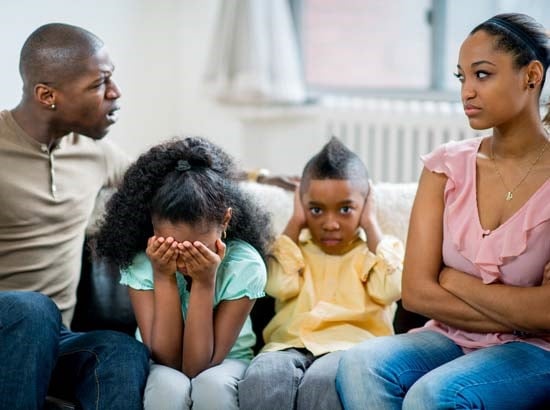
Financial changes can also affect housing, education, childcare, and the ability of each parent to maintain a stable household. Extended families may become involved in caregiving, while divorced adults may need to adjust to new responsibilities and social expectations. These challenges are not inevitable outcomes of every divorce. Careful planning, age-appropriate conversations with children, fair parenting arrangements, and appropriate professional support can help families navigate the transition more constructively.
Ways Couples Can Address Marital Problems
Not every disagreement means a marriage is failing. Some problems can improve when partners recognise their patterns of conflict and make a genuine effort to change them. The most useful approach depends on the seriousness of the problem, the willingness of both people to participate, and whether the relationship remains safe.
Practical steps that may help include:
-
Communicating honestly about emotional needs, expectations, and future plans.
-
Establishing fair arrangements for household duties, finances, and childcare.
-
Seeking qualified couples counselling when both partners are willing and it is appropriate.
-
Setting clear boundaries with relatives and respecting each other’s privacy.
These measures are not guarantees that a marriage will survive. Persistent abuse, coercion, threats, or violence require a different response, with personal safety taking priority over reconciliation. Counselling should never be used to pressure someone into remaining in an unsafe relationship. In some situations, separation may be a reasonable and necessary decision.
Future Outlook for Marriage and Divorce in India
The future of marriage in India will likely reflect the interaction of economic development, changing gender roles, educational opportunities, family expectations, and access to legal support. As more people discuss emotional well-being and relationship compatibility openly, the public conversation about divorce may become less focused on social stigma and more focused on individual circumstances. At the same time, marriage continues to hold considerable cultural and personal significance for many Indian families.
It is important not to interpret greater visibility as proof of a dramatic nationwide increase. Social media can make individual divorce stories highly visible, but viral examples cannot establish a national trend. Accurate conclusions require comparable data collected over time, with clear distinctions between divorce, separation, and other marital statuses. Researchers, policymakers, and readers should also recognise that regional averages cannot explain every couple’s experience.
The divorce rate in India may change as social attitudes and family structures evolve, but its direction and scale should be assessed through reliable demographic evidence rather than assumptions. Better access to trustworthy information, relationship education, legal assistance, and support services can help people make informed decisions about marriage and separation.
Conclusion
Marriage in India is undergoing gradual social change, shaped by evolving expectations, financial realities, individual independence, and a growing emphasis on mutual respect. Although divorce remains relatively uncommon in the available national demographic evidence, separation and marital dissatisfaction are important issues that deserve careful attention. Understanding these experiences requires looking beyond a single percentage and recognising the differences between regions, communities, generations, and individual relationships. The most meaningful way to understand the divorce rate in India is to examine the quality of the underlying data alongside the social and economic circumstances that shape marital decisions.