


Consumers play a vital role in every economy. Whether purchasing groceries, booking travel tickets, shopping online, or subscribing to digital services, individuals engage in transactions daily. However, consumers often face challenges such as defective products, misleading advertisements, poor service quality, unfair pricing, and online fraud. This is where consumer rights become essential.
In India, consumer protection has gained significant importance due to rapid technological advancements, growing e-commerce platforms, and increasing consumer awareness. Modern consumers have access to a wide range of products and services, but they also encounter new risks that require stronger legal safeguards. Understanding consumer rights helps individuals make informed decisions and seek remedies when treated unfairly.
The legal framework governing consumer protection in India has evolved to address changing market conditions. The Consumer Protection Act, 2019 strengthened consumer welfare by introducing provisions related to e-commerce transactions, product liability, and dispute resolution mechanisms. As a result, consumers today enjoy greater protection than ever before.
What Are Consumer Rights?
Consumer rights refer to the legal protections and entitlements provided to buyers of goods and services. These rights ensure that consumers are treated fairly, receive accurate information, and have access to remedies when products or services fail to meet promised standards.
The concept of consumer rights is based on the principle that consumers should not be exploited by manufacturers, sellers, service providers, or advertisers. These rights promote transparency, accountability, and ethical business practices. In a competitive marketplace, consumer protection encourages businesses to maintain quality standards while fostering trust among customers.
In today’s digital economy, consumer rights extend beyond traditional retail purchases. Online shopping, digital subscriptions, mobile applications, and financial services are also covered under consumer protection laws, ensuring that consumers remain protected regardless of the purchasing platform.
Importance of Consumer Rights in Modern Society
Consumer protection is essential for maintaining balance between businesses and customers. Without adequate safeguards, consumers may become vulnerable to fraud, misleading claims, unsafe products, and unfair trade practices.
Strong consumer rights contribute to economic growth by encouraging fair competition among businesses. When consumers feel confident about their legal protections, they are more likely to participate actively in the marketplace. This confidence increases demand, supports innovation, and promotes responsible business conduct.
Moreover, rising internet usage and online commerce have made consumer awareness more important than ever. Digital transactions involve unique risks such as data privacy concerns, fake websites, counterfeit products, and deceptive advertising. Effective consumer protection helps address these challenges and creates a safer commercial environment.
Key Consumer Rights in India
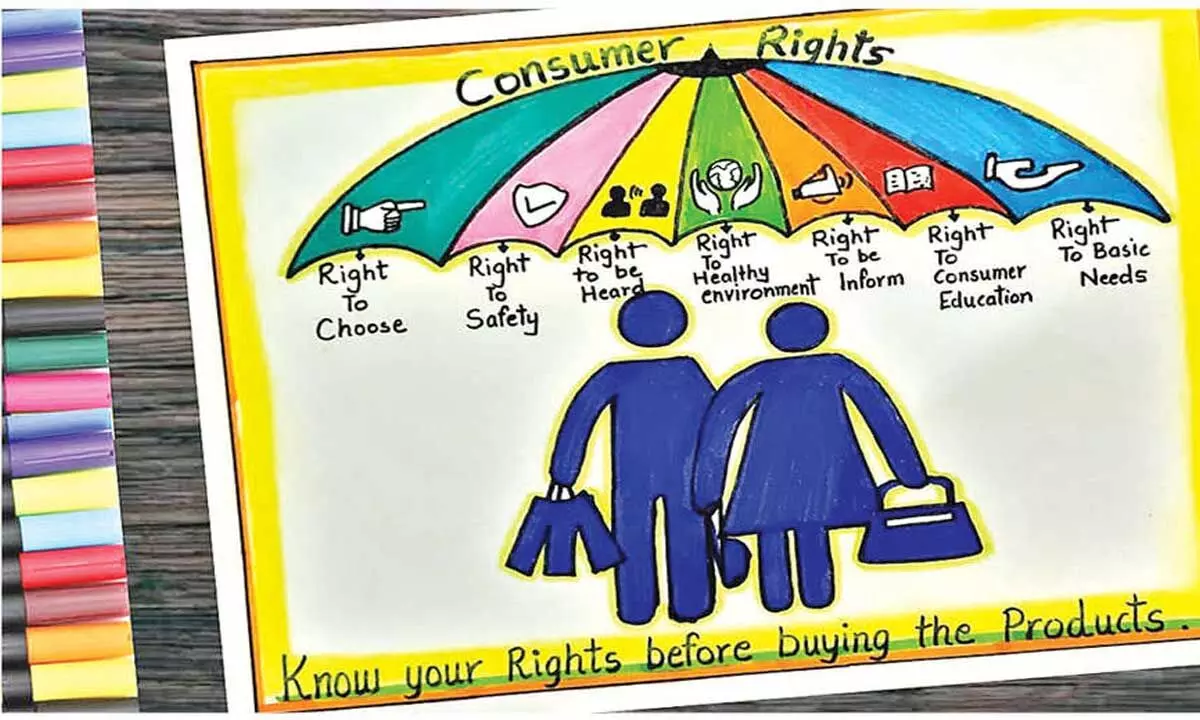
The Consumer Protection Act recognizes several fundamental rights that protect consumers from unfair practices and ensure fair treatment.
Right to Safety
Consumers have the right to be protected from goods and services that may endanger their health, life, or property. Manufacturers and service providers must ensure that their products meet safety standards and comply with regulatory requirements.
For example, electrical appliances, medicines, food products, and vehicles must undergo quality checks before reaching consumers. If a product causes harm due to defects or negligence, consumers may seek compensation through legal channels.
Right to Information
Consumers are entitled to receive complete and accurate information about products and services before making a purchase decision. This includes details regarding price, quality, quantity, ingredients, risks, warranty conditions, and usage instructions.
Transparent information allows consumers to compare options and avoid deceptive marketing practices. Businesses that conceal important facts or provide misleading information may face legal consequences.
Right to Choose
The right to choose ensures that consumers have access to a variety of products and services at competitive prices. Businesses should not force consumers to purchase unwanted products or engage in unfair monopolistic practices.
Healthy competition benefits consumers by encouraging better quality, innovation, and reasonable pricing across industries.
Right to Be Heard
Consumers have the right to voice complaints, concerns, and grievances regarding products or services. Businesses and regulatory authorities must provide appropriate mechanisms for addressing consumer issues.
This right ensures that consumer feedback receives attention and contributes to improved service standards and accountability.
Right to Seek Redressal
Consumers who suffer losses due to defective products, deficient services, or unfair trade practices can seek compensation and corrective action through legal channels. The redressal system aims to resolve disputes efficiently and fairly.
Right to Consumer Education
Consumer awareness is a critical component of protection. Individuals should understand their legal rights, responsibilities, and available remedies. Education empowers consumers to identify unfair practices and make informed decisions.
Consumer Rights and E-Commerce
The rapid growth of online shopping has transformed consumer behavior across India. While e-commerce offers convenience and competitive pricing, it also presents challenges such as counterfeit products, delayed deliveries, hidden charges, and misleading product descriptions.
The Consumer Protection Act, 2019 introduced specific provisions for digital marketplaces. Online sellers are required to provide accurate product information, transparent return policies, and accessible customer support. E-commerce platforms must also address consumer complaints within prescribed timelines.
Consumers should carefully review product details, seller ratings, return policies, and payment security measures before completing online transactions. Maintaining records such as invoices, payment receipts, and communication with sellers can be helpful when filing complaints.
Common Consumer Issues Faced Today

Several challenges continue to affect consumers despite improved legal protections.
- Misleading advertisements and exaggerated claims.
- Defective or substandard products.
- Delayed delivery or non-delivery of online orders.
- Hidden fees and unfair billing practices.
- Data privacy concerns and digital fraud.
These issues highlight the continuing relevance of consumer rights in protecting individuals from financial loss and unfair treatment. Greater awareness and prompt reporting of violations can help strengthen consumer protection mechanisms.
Consumer Dispute Redressal System
India has established a structured dispute resolution framework to address consumer complaints efficiently. The system allows consumers to seek remedies without undergoing lengthy legal procedures associated with traditional courts.
Consumer Commissions
Consumer disputes are resolved through specialized commissions that operate at different levels depending on the value of the claim. These bodies handle complaints related to defective goods, deficient services, unfair trade practices, and product liability.
The objective is to provide affordable, speedy, and accessible justice for consumers. Many complaints can now be filed electronically, making the process more convenient and efficient.
Steps for Filing a Consumer Complaint
Consumers should first attempt to resolve disputes directly with the seller or service provider. If the issue remains unresolved, a formal complaint may be submitted to the appropriate consumer commission.
Before filing a complaint, consumers should gather relevant evidence such as purchase receipts, invoices, warranty documents, emails, photographs, and communication records. Strong documentation significantly improves the chances of obtaining a favorable outcome.
Consumer Rights and Product Liability
One of the significant developments under modern consumer law is the concept of product liability. Manufacturers, distributors, and sellers may be held responsible if defective products cause harm to consumers.
Product liability encourages businesses to maintain strict quality control measures throughout production and distribution processes. Consumers who suffer injury, property damage, or financial loss due to defective products can seek compensation from responsible parties.
This provision has strengthened consumer rights by increasing accountability within supply chains and promoting higher safety standards across industries.
Consumer Rights vs Consumer Responsibilities
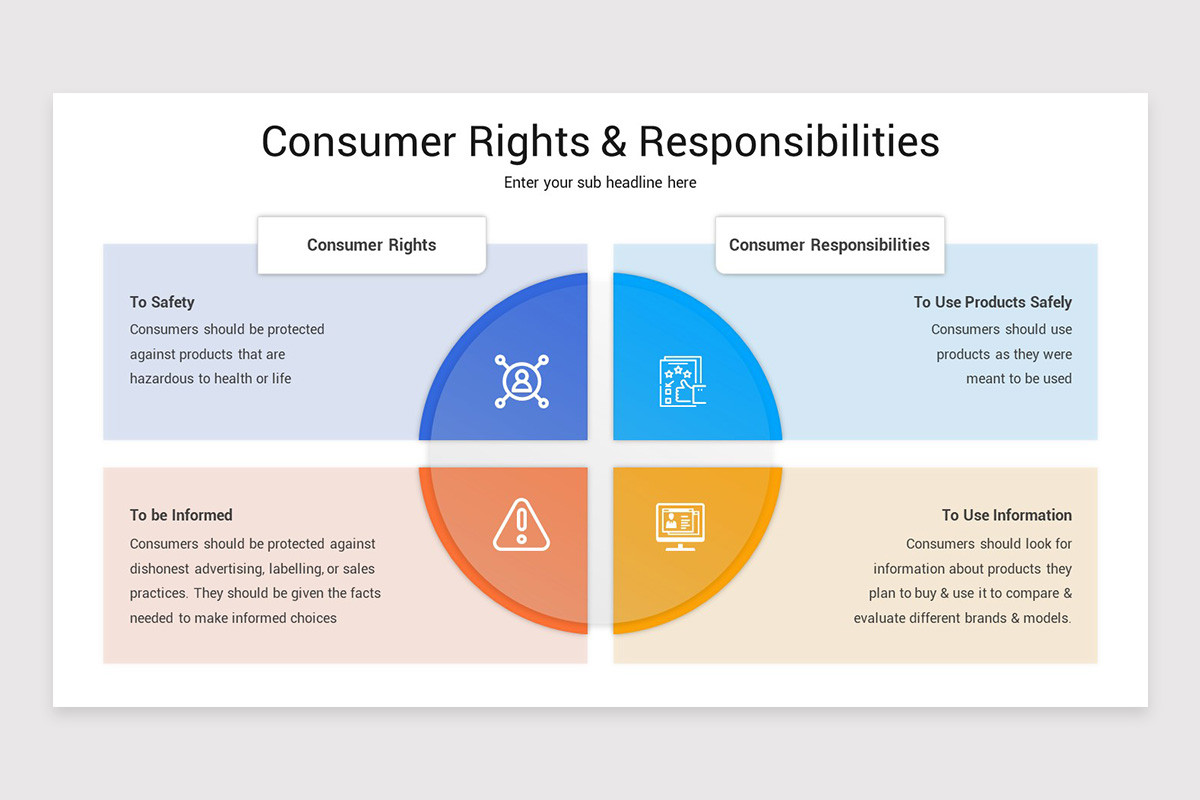
While consumers enjoy legal protections, they also have certain responsibilities that contribute to a fair marketplace.
| Consumer Rights | Consumer Responsibilities |
|---|---|
| Receive safe products and services | Use products according to instructions |
| Obtain accurate information | Verify product details before purchase |
| Seek compensation for losses | Keep purchase records and receipts |
| File complaints against unfair practices | Report genuine issues honestly |
| Access consumer education | Stay informed about laws and regulations |
A balanced approach ensures that both businesses and consumers contribute to a healthy and transparent marketplace.
Role of Consumer Awareness
Awareness is one of the most effective tools for consumer protection. Informed consumers are less likely to fall victim to fraud, misleading advertisements, or unfair trade practices. They are also more capable of identifying violations and pursuing appropriate remedies.
Government agencies, educational institutions, consumer organizations, and media platforms play an important role in promoting awareness about consumer rights. Public campaigns, workshops, and digital resources help educate citizens about their legal protections and available complaint mechanisms.
As technology continues to evolve, consumer education must also adapt to address emerging issues such as cyber fraud, digital payments, artificial intelligence-driven marketing, and data privacy concerns.
Future of Consumer Protection in India
The future of consumer protection is closely linked to technological advancements and changing consumer behavior. As businesses increasingly operate through digital platforms, regulators must address new challenges involving online transactions, data security, and cross-border commerce.
Artificial intelligence, digital marketplaces, and personalized advertising are creating opportunities and risks simultaneously. Policymakers are expected to strengthen regulatory frameworks to ensure that consumer rights remain effective in the evolving digital environment.
Increased collaboration between regulators, businesses, and consumer advocacy groups will be crucial in building a fair, transparent, and consumer-friendly economy.
FAQs
What are consumer rights?
Consumer rights are legal protections that ensure consumers receive safe products, accurate information, fair treatment, and access to remedies when goods or services fail to meet expected standards. These rights help protect individuals from exploitation and unfair trade practices.
Why are consumer rights important?
Consumer rights are important because they promote fairness, transparency, and accountability in the marketplace. They protect consumers from fraud, defective products, misleading advertisements, and poor-quality services while encouraging ethical business practices.
Can online shoppers file consumer complaints?
Yes. Consumers who experience issues with online purchases can file complaints against sellers or e-commerce platforms. The law provides protections for digital transactions, including misleading product descriptions, delayed deliveries, and defective goods.
What documents are required for a consumer complaint?
Consumers should retain invoices, receipts, warranty cards, payment records, screenshots, emails, photographs, and any communication related to the dispute. These documents serve as evidence when pursuing legal remedies.
What is product liability in consumer law?
Product liability refers to the legal responsibility of manufacturers, sellers, and distributors for harm caused by defective products. Consumers may seek compensation if a product causes injury, property damage, or financial loss.
How can consumers protect themselves from fraud?
Consumers can protect themselves by verifying seller credentials, reading product descriptions carefully, comparing prices, reviewing return policies, using secure payment methods, and staying informed about their consumer rights.
Conclusion
Consumer rights form the foundation of a fair and balanced marketplace. They protect individuals from unsafe products, deceptive practices, deficient services, and unfair treatment while promoting transparency and accountability among businesses. In today’s rapidly evolving digital economy, understanding these rights is more important than ever.
As online commerce, technology, and consumer expectations continue to grow, awareness remains the strongest defense against exploitation. By understanding and exercising consumer rights, individuals can make informed decisions, seek appropriate remedies, and contribute to a marketplace that values fairness, trust, and consumer welfare.
Read More:-What Is Consumer Rights? A Simple Guide for Consumers