



Ending a marriage is a significant personal decision that can bring emotional, financial, and legal challenges. Understanding the divorce procedure before taking any formal action can help individuals prepare for the process, understand their rights, and make informed decisions about their future. Whether both spouses agree to separate or one spouse intends to contest the decision, knowing the general legal steps can reduce confusion and help prevent avoidable delays.
The process of divorce varies according to the country, applicable family law, the circumstances of the marriage, and the level of agreement between the spouses. In India, for example, divorce proceedings may be governed by different personal laws or the Special Marriage Act, depending on how the marriage was solemnized and which legal provisions apply. Matters involving children, financial support, shared property, and outstanding responsibilities can also influence the proceedings. Therefore, it is important to understand the relevant legal framework rather than relying entirely on another person’s experience.
This guide explains the major stages involved in divorce, the differences between mutual consent and contested cases, the documents commonly required, and the issues that couples should consider before approaching a court. Although preparation can make the experience more manageable, individual circumstances may require specific legal advice.
Understanding the Divorce Procedure
The divorce procedure refers to the legal process through which a marriage is formally dissolved by a competent court or other legally authorized process, depending on the jurisdiction. In India, court proceedings are commonly required for civil divorce under the applicable marriage laws. The process generally involves determining the appropriate legal grounds, preparing a petition, submitting the necessary documents, notifying the other spouse where required, and obtaining a final decree. Additional hearings may be necessary when the spouses disagree about the divorce itself or related matters.
It is important to recognize that separation and divorce are not necessarily the same thing. A couple may live separately for an extended period without having legally dissolved their marriage. During that time, certain marital rights and obligations may continue to exist. A legal divorce provides formal recognition that the marriage has ended, subject to the applicable law and the final court order. For example, a person who has moved into a separate home may still need a court decree before remarrying legally. Understanding this distinction helps prevent misunderstandings about legal status and future responsibilities.
Types of Divorce and How They Differ
The process generally depends on whether both spouses agree to end the marriage and whether they can resolve related matters. In India, mutual consent and contested divorce are two common forms of court-based proceedings. Each follows a different path, and the time required can vary considerably.
Mutual Consent Divorce
A mutual consent divorce is generally an option when both spouses agree that the marriage should end and are willing to proceed together under the applicable law. They may also reach agreements concerning maintenance, child custody, visitation, and the division or settlement of financial interests. When these matters are discussed constructively before filing, the process may become more predictable because the court does not have to resolve every disagreement through a contested hearing.
Under Section 13B of the Hindu Marriage Act, 1955, eligible couples can seek divorce by mutual consent when the statutory requirements are satisfied, including the applicable period of living separately. The law provides for a second motion, subject to its conditions. The Supreme Court has recognized that the statutory waiting period may be waived in appropriate cases when the legal requirements for waiver are met; it is not automatically waived in every case. Other marriage laws may contain different provisions, so the correct legal framework must be identified before proceeding.
Contested Divorce
A contested divorce occurs when one spouse seeks dissolution of the marriage and the other spouse disagrees with the claim, or when the parties cannot resolve important issues. Depending on the applicable law, the petitioner must establish legally recognized grounds for divorce. These may include cruelty, adultery, desertion, or other grounds specified by the relevant legislation. The availability and precise meaning of each ground depend on the law applicable to the marriage.
Contested cases can involve several hearings, evidence, witness testimony, legal arguments, and judicial decisions. For instance, if one spouse alleges cruelty and the other denies the allegations, the court may need to examine the evidence before deciding whether the statutory requirements have been satisfied. Disagreements over maintenance or child arrangements can add further complexity. A contested case is not necessarily unsuccessful or hostile, but it usually requires more preparation and may take longer than a matter in which both spouses cooperate.
Step-by-Step Divorce Procedure in India
Although individual cases differ, the following stages provide a general overview of how court-based divorce proceedings may progress in India. The exact steps depend on the applicable legislation, the facts of the case, and the practices of the relevant court.
Step 1: Identify the Applicable Law and Legal Grounds
The first step is to establish which law governs the marriage and whether the circumstances satisfy the requirements for divorce. Depending on the situation, the relevant law may include the Hindu Marriage Act, the Special Marriage Act, or another applicable personal law. The legal grounds available to a spouse and the procedural requirements can differ between these frameworks.

A person should review the circumstances carefully before preparing a petition. Relevant considerations may include the duration of the marriage, the period of separation, the nature of the disagreements, previous court proceedings, and any existing agreements or orders. Speaking with a qualified family lawyer can help determine whether the proposed case is legally appropriate and identify potential issues before filing.
Step 2: Prepare the Petition and Supporting Documents
Once the applicable legal provisions have been identified, the next stage is preparing the petition and collecting supporting records. The petition generally explains the relevant background, marriage details, facts supporting the claim, and the relief being requested from the court. In a mutual consent case, the spouses usually present the required joint petition and address the arrangements they have agreed upon.
Documents commonly requested may include the marriage certificate or other evidence of marriage, identity and address documents, photographs where relevant, information about children, financial records, and evidence supporting the grounds for divorce. The precise requirements vary by court and case type. Documents should be accurate, complete, and consistent with the facts presented in the petition. Missing information or contradictory statements can result in objections or additional requirements.
Step 3: File the Petition in the Appropriate Court
The petition must be submitted to a court with the necessary jurisdiction. The appropriate court may depend on factors such as where the marriage took place, where the spouses last lived together, or where a spouse currently resides, as specified by the applicable law. Filing in the wrong court can create procedural complications, making jurisdiction an important issue to check before submission.
After filing, the court registry may examine the documents and identify any procedural defects that need correction. Applicable filing fees and other formal requirements must also be addressed. Once the petition is accepted for processing, the matter may be listed for a hearing or further procedural action. Filing the petition does not mean that the marriage has already ended; a legally effective final decree or other recognized legal outcome is generally necessary.
Step 4: Notice, Response, and Initial Hearings
In contested proceedings, the court generally arranges for notice or service of the petition on the other spouse. The responding spouse may then submit a reply in accordance with the applicable procedural rules. The court can examine the parties’ positions, identify the issues in dispute, and consider whether mediation or another settlement process may be appropriate.
During this stage, the court may encourage the parties to explore reconciliation or settlement where required or appropriate under the governing law. This does not mean that every couple must resume the relationship. Instead, the objective is to ensure that the matter is handled fairly and that opportunities for lawful resolution are considered. If the dispute continues, the court may proceed toward evidence and arguments.
Step 5: Evidence, Settlement, and Final Hearing
When a divorce is contested, the parties may need to present documents, witness testimony, and other relevant evidence. Each side generally has an opportunity to explain its position under the applicable court procedure. The judge evaluates whether the legal requirements have been met and considers any related applications or disputes that fall within the proceedings.
If the spouses settle some or all of their disagreements during the case, they may present the proposed terms to the court, subject to the applicable legal requirements. However, a private agreement does not automatically replace a court order where judicial approval or a formal decree is required. When the matter cannot be resolved, the court considers the evidence and legal arguments before making its decision.
Step 6: Obtain the Divorce Decree and Review Further Options
The final stage is the court’s decision and the issuance of the divorce decree when the petition is allowed. The decree formally records the dissolution of the marriage according to the applicable law. The parties should obtain and preserve an official copy because it may be needed for administrative records, future legal proceedings, or other situations in which proof of marital status is required.
If a party believes that the decision contains a legal error or is otherwise challengeable, available appeal or review options may apply, subject to strict deadlines and statutory conditions. A lawyer can explain whether any further action is appropriate. Before making plans to remarry, the individual should confirm that the decree is legally effective and that no applicable restriction prevents the proposed marriage.
Documents Commonly Required for Divorce
The documents needed for a divorce case depend on the applicable law, the court, and the issues involved. Preparing records early can make the filing process more organized and reduce the possibility of repeated requests for information.
Commonly relevant documents include:
- Marriage certificate or other evidence establishing the marriage.
- Identity and address proof for the parties, as required.
- Financial records relating to income, assets, liabilities, and expenses.
- Documents concerning children, previous court orders, or relevant evidence supporting the case.
Not every document on this list is required in every proceeding. For example, evidence of specific allegations may be important in a contested case, while financial disclosures and written settlement terms may be particularly relevant when maintenance or property arrangements are involved. The filing lawyer or court registry can clarify the requirements applicable to the individual matter.
Important Issues to Resolve During Divorce
Child Custody and Parenting Arrangements
When children are involved, their welfare is a major consideration in decisions about custody, visitation, and parenting responsibilities. Parents may agree on where the children will live, how holidays and school breaks will be handled, and how important decisions will be made. However, the court may examine the proposed arrangements to determine whether they serve the child’s best interests.
For example, parents may agree that a child will live primarily with one parent while maintaining regular contact with the other. Practical details such as school schedules, healthcare decisions, travel, and communication can help make such arrangements more workable. Parents should focus on the child’s stability and needs rather than treating custody as a competition between spouses.
Maintenance, Alimony, and Financial Responsibilities
Financial support can become an important issue when one spouse has fewer financial resources or when the parties have different earning capacities. Depending on the applicable law and circumstances, a court may consider interim maintenance during proceedings or longer-term financial support. Relevant factors can include income, reasonable expenses, assets, liabilities, the standard of living during marriage, and the needs of any dependent children.
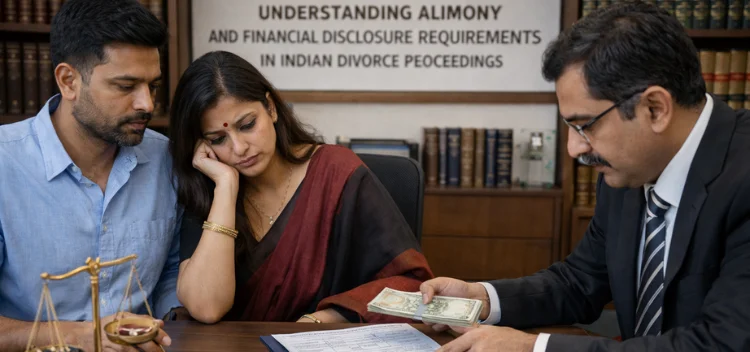
There is no single amount or formula that applies to every divorce. A spouse seeking financial support should maintain accurate records of income and expenses, while both parties should provide truthful financial information when required. Clear documentation can help the court evaluate the matter and reduce disputes caused by incomplete or misleading disclosures.
Property and Shared Assets
Property disputes can involve a family home, savings, investments, loans, household belongings, or assets held in one or both spouses’ names. The legal treatment of these assets depends on ownership, the source of funds, the applicable law, and the specific facts. Marriage does not necessarily mean that every asset is automatically divided equally, so assumptions about ownership should be avoided.
Before agreeing to a financial settlement, the parties should identify relevant assets and debts and understand the legal consequences of the proposed arrangement. Where a property is jointly owned or subject to a mortgage, transferring ownership or changing payment responsibilities may require additional formalities. A carefully prepared settlement can help reduce future misunderstandings, but it should be reviewed for legal and financial implications before being finalized.
Mutual Consent vs. Contested Divorce: Key Differences
| Factor | Mutual Consent Divorce | Contested Divorce |
|---|---|---|
| Agreement | Both spouses agree to seek divorce | One or more important issues remain disputed |
| Legal basis | Statutory requirements for mutual consent must be met | Applicable grounds must be established |
| Court involvement | The court examines consent and legal requirements | The court may assess evidence and disputed claims |
| Duration | May be shorter, but statutory conditions and hearings apply | Often takes longer because of hearings and evidence |
| Financial and parenting issues | Terms may be negotiated jointly | Disputes may require separate judicial decisions |
Neither option guarantees a particular result or timeline. The most suitable route depends on the circumstances, legal requirements, safety considerations, and the ability of both parties to participate freely and honestly.
How Long Does the Divorce Procedure Take?
The duration depends on the type of case, the applicable statute, the court’s workload, the completeness of the documents, and the level of disagreement between the spouses. A mutual consent divorce may progress more efficiently when all requirements are met and the parties cooperate. Nevertheless, any statutory separation period, waiting period, required motions, and court scheduling must be considered. A contested case may take considerably longer if it involves complex evidence, repeated hearings, financial disputes, or appeals.
It is therefore unwise to rely on a fixed timeline promised by another person or advertised as universally guaranteed. Individuals can help avoid unnecessary delays by submitting accurate records, attending scheduled hearings, responding to court directions promptly, and seeking legal guidance when complications arise. A realistic timeline should be based on the specific court and facts rather than a general estimate.
Common Mistakes to Avoid During Divorce
People sometimes make decisions during divorce proceedings without fully considering their legal consequences. Moving out, transferring assets, signing an unclear settlement, or making informal promises about financial support can create complications if the parties later disagree about what was intended. Similarly, hiding income, destroying relevant documents, or making unsupported allegations can undermine credibility and make the proceedings more difficult.
A careful and organized approach is usually more helpful. Keep copies of important records, communicate respectfully where it is safe to do so, and review settlement terms before signing them. Avoid making major financial decisions based solely on informal advice. If domestic violence, threats, coercion, or financial control are involved, prioritize personal safety and seek appropriate professional or legal support. No one should be pressured into consenting to a divorce settlement or giving up legal rights without understanding the consequences.
Conclusion
Understanding the divorce procedure can help individuals approach a difficult life transition with greater clarity and preparation. From identifying the applicable law and collecting documents to filing a petition, attending hearings, resolving financial matters, and obtaining a final decree, each stage has a distinct purpose. The process may be relatively straightforward when both spouses agree and meet the legal requirements, while contested cases can require more time, evidence, and judicial consideration.
The most important step is to understand the legal requirements that apply to the individual marriage rather than assuming that every divorce follows the same rules. Careful documentation, realistic expectations, informed decisions about children and finances, and qualified legal guidance can make the process more manageable. Although divorce involves the formal end of a relationship, approaching the legal proceedings responsibly can help both parties protect their rights and prepare for the next stage of their lives.